
Insights
Perspectives from the field.
Field notes, lessons, and frameworks from senior DEBCOR SAP architects.
 SAP Business AI
There's SAP funding for AI projects. Most companies never claim it.
DEBCOR is now an approved partner in SAP's Business AI Partner-Led Adoption Incentive Program — a €100M program unveiled at Sapphire 2026 to help SAP customers move Business AI from planning to production.
July 11, 2026
- SAP AI
DEBCOR approved for SAP's €100M Business AI incentive — and opening free assessments
SAP formally onboarded DEBCOR Engineering to its Business AI Partner-Led Adoption Incentive Program. DEBCOR is opening a complimentary 1–2 week AI assessment to help SAP customers find a fundable first use case before the program closes at the end of 2026.
July 10, 2026
 SAP Products
Dynamic Pricing Tool Now Live on SAP Store
DEBCOR's Dynamic Pricing Conditions Load and Maintenance Tool has been approved and published on SAP Store (Solution ID 2002723) — the first DEBCOR solution to reach general availability on the SAP marketplace.
June 29, 2026
 SAP AI
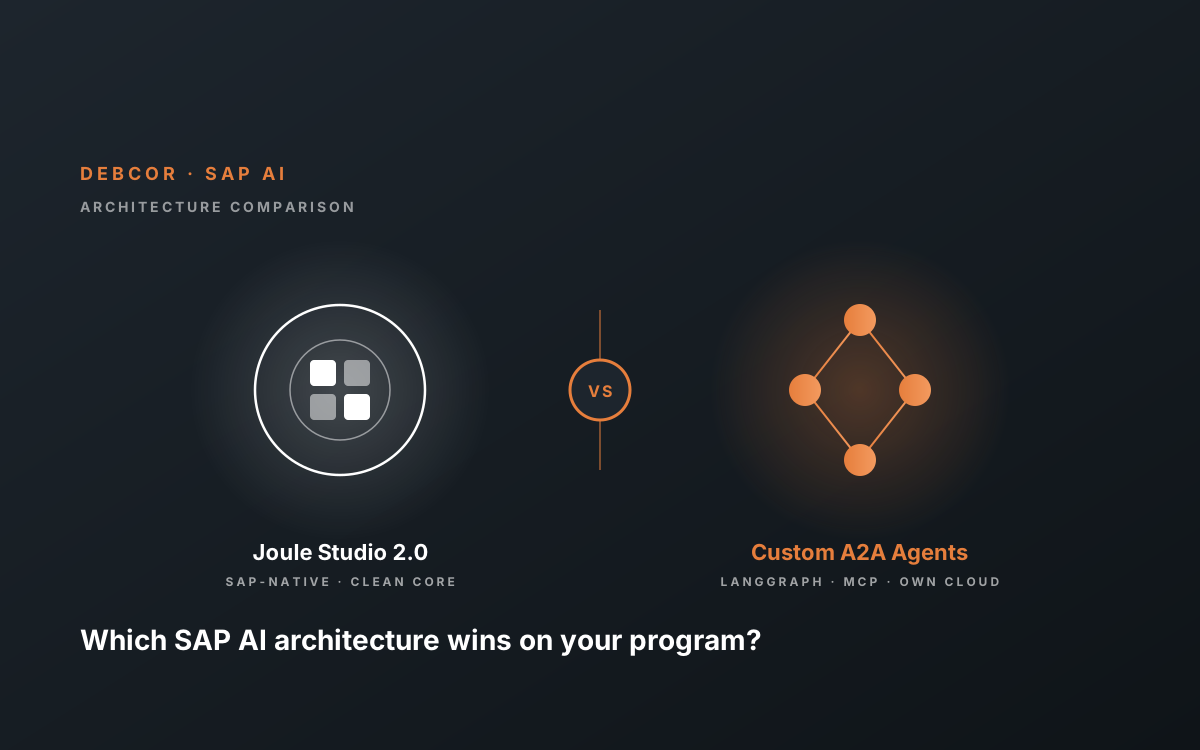
Joule Studio vs Custom A2A Agents — The Build Track Decision
Joule Studio 2.0 is SAP's low-code path to custom agents. Custom A2A agents on BTP (LangGraph, Claude, MCP) are the pro-code path. Both are real today — and most organisations need both.
June 20, 2026
 SAP Migration
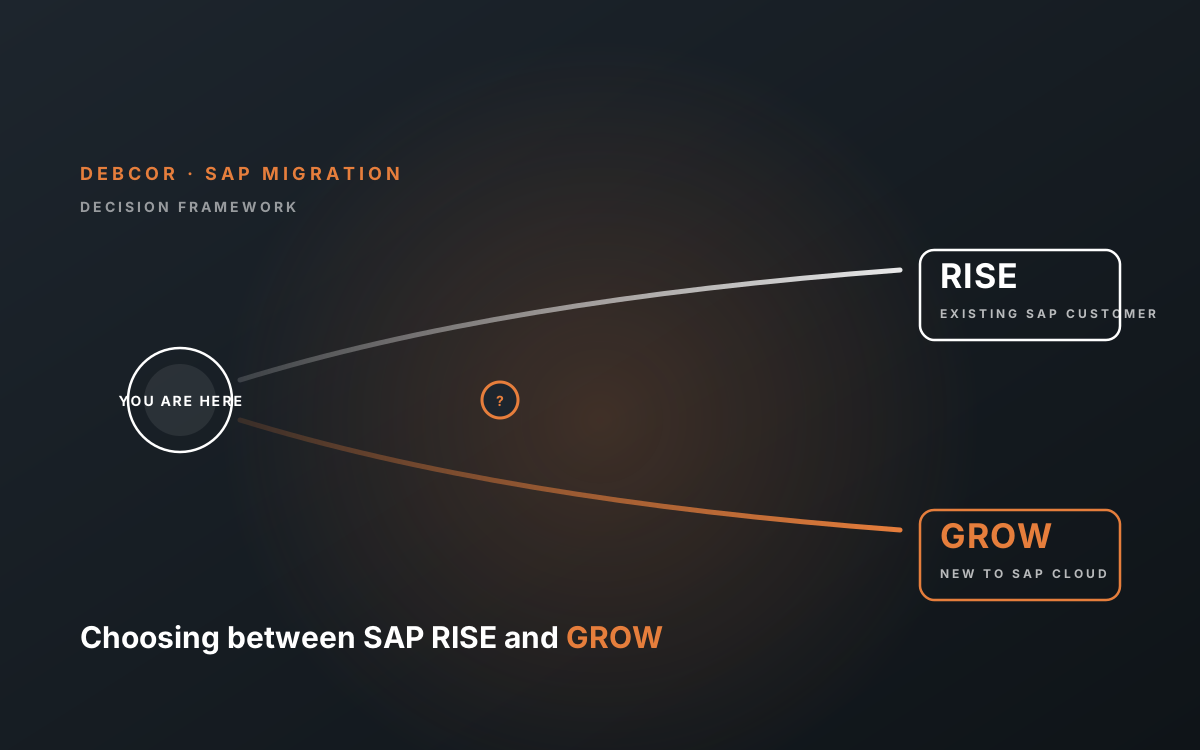
SAP RISE vs GROW — Which Path Is Yours?
RISE targets existing SAP customers modernising to S/4HANA Cloud. GROW targets new-to-SAP mid-market moving to the same platform. The decision comes down to your starting point, your data, and how much lift-and-shift your team can absorb.
May 30, 2026
 SAP Roadmap
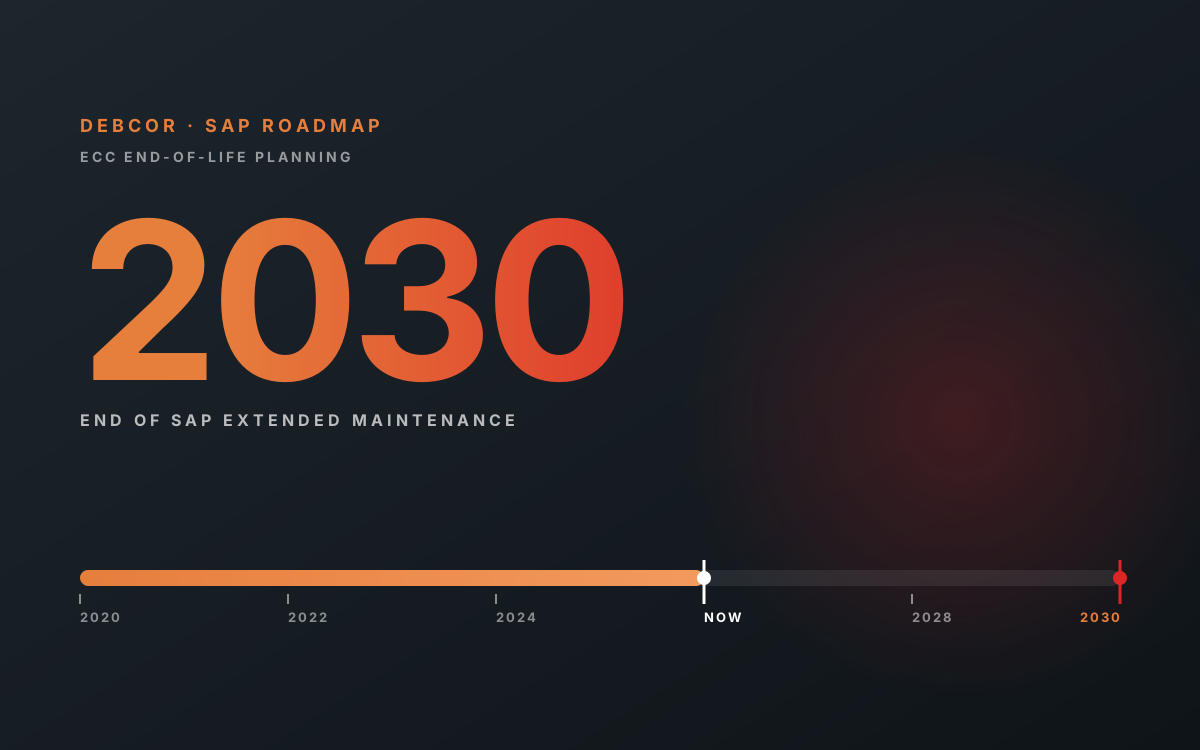
SAP ECC Extended Maintenance ends in 2030 — plan now.
The clock is running on ECC. Extended maintenance ends 2030, mainstream ended in 2027. What that means for your migration window, your custom code, and the incentives you can still claim.
May 15, 2026
 Insight
From Kickoff to Go-Live Faster: The deBCor Accelerator Advantage
How deBCor's pre-built toolkit of proven SAP accelerators gets clients to go live faster — without cutting corners.
March 17, 2026
 Insight
How AI is Cutting SAP S/4HANA Blueprint Time by 70%
Blueprint and design is where SAP programs lose the most time — and where AI is delivering the most measurable impact.
March 17, 2026
 Insight
The SAP AI Reality Check: What's Actually Production-Ready in 2026
Every SAP vendor is talking about AI. Here's an honest assessment of what's real, what's coming, and what's still a roadmap slide.
March 17, 2026
Common Questions
What readers ask about DEBCOR Insights.
What topics does DEBCOR Insights cover?
The content track follows where buyers actually need clarity, not where marketing keywords are densest. Recurring topics include SAP Sapphire 2026 takeaways (Joule Studio 2.0, the Autonomous Enterprise, A2A and MCP), AI agent architectures for SAP (the five-layer pattern, governance and auditing as architecture, the Company Intelligence Layer), S/4HANA migration patterns (ECC end-of-support, RISE vs GROW selection, brownfield/bluefield/greenfield trade-offs), BTP delivery (clean-core extensions, Integration Suite, PI/PO migration), master data and data quality, programme rescue patterns (the seven failure modes documented in the Rescue Playbook), and the partnership stack (SAP + Google Cloud, Anthropic Claude). Articles aim to be field-grade — practical guidance an SAP architect or programme leader can act on — not vendor positioning.
Who writes the content — engineers or marketers?
Engineers. Bylines belong to DEBCOR's senior architects and the firm's founder, Gareth de Bruyn — the same people who run client engagements. Gareth co-authored the first ABAP textbook ever published (Introduction to ABAP/4 Programming for SAP, Prima Publishing, 1996) and is the author or co-author of 13 SAP technical books in total. The Chief Architect holds every SAP architect-tier certification SAP currently offers (Enterprise Architect, Solution Architect BTP, Data Architect BDC, LeanIX) plus the SAP Generative AI Developer credential. The standard for an Insights article is that the writer has built whatever they are writing about — not described it second-hand from a vendor briefing.
How often is content published?
Roughly weekly, with two patterns. First, ongoing analysis — Sapphire 2026 commentary, Joule Studio 2.0 deep dives, AI on SAP architecture posts, ECC end-of-support guidance — published as the underlying material warrants it (when SAP changes a product roadmap, when a new pattern lands in client engagements, when a buyer question recurs enough times to be worth answering once in writing). Second, the field-note posts — short, specific lessons from active engagements, posted as they surface. The pace is set by whether there is something worth saying, not by a content calendar.
How are the Insights articles different from the 13 published SAP books?
The books are reference works — Introduction to ABAP/4 Programming for SAP (Prima, 1996, the first ABAP textbook ever published), Implementing SAP Solutions on Cloud, ABAP Performance Tuning, and ten others authored or co-authored by Gareth de Bruyn — written for engineers learning the discipline. Three more SAP books are forthcoming in 2026. The Insights articles are shorter, more current, and field-driven: a book chapter takes a year to update; an Insights post can address a roadmap change SAP announced last month. Together they cover the same intellectual territory but at different depths and cadences. The books page (debcor.com/about/published-works) lists the full catalogue with ISBNs and publishers.
Can I subscribe and get articles delivered?
Yes. The newsletter is the primary subscription channel — short, weekly, links to the most-substantive recent posts plus the occasional standalone piece written for subscribers. LinkedIn carries the article posts as they publish; the DEBCOR LinkedIn page is the right follow for direct distribution. For research-grade content (gated white papers and the Rescue Playbook), the Resources section on the homepage delivers PDFs in exchange for an email. The standard across all channels: no sales sequences disguised as newsletters — if a piece is sponsored or commercial, it says so on the page.
Which SAP versions and product lines does the content cover?
S/4HANA (Cloud Public Edition / GROW, Cloud Private Edition / RISE, and on-premise), ECC (with a documented end-of-support transition focus through 2027), SAP BTP (Cloud Foundry, Kyma, Integration Suite, Build Code, Build Apps, the Generative AI Hub, AI Core, Joule and Joule Studio 2.0), SAP Business Data Cloud, the SAP Knowledge Graph, SAP Datasphere, Ariba and SuccessFactors integration patterns, and the partner ecosystem (Anthropic Claude on SAP, Google Gemini on BTP via the partnership, OpenAI and other foundation model access). Older platform coverage (PI/PO, classic ECC custom code patterns) appears specifically in the context of migration content — what to do with it, not how to extend it.